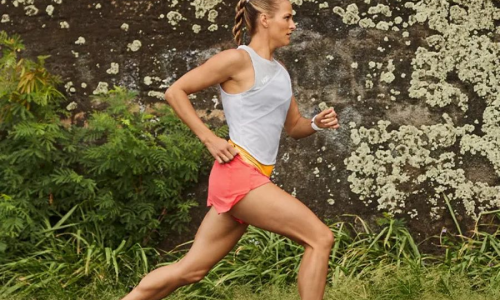

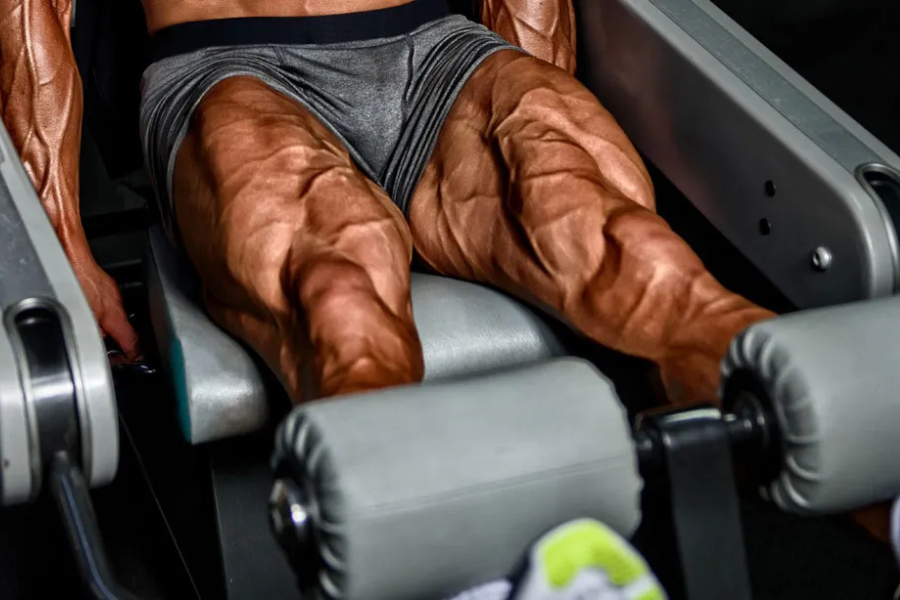
Building stronger and more defined quadriceps can make everyday movements like climbing stairs and squatting down to pick up groceries feel smoother and more controlled. Whether you are new to strength training or already comfortable in the weight room, focusing on the best quad exercises is key to balancing your overall fitness routine. Your quads, made up of four distinct muscles, play a major role in knee extension, hip flexion, and daily mobility. When you train them regularly, you can supercharge your lower body power, boost your speed in sports, and even reduce your risk of common knee injuries.
Below, you will learn about ten highly effective quad exercises. You will also discover how to tailor them for your fitness level, from simple bodyweight moves to more advanced weighted variations. Numerous studies and fitness experts confirm that including these movements in your workouts can enhance strength, stability, and muscle growth in the front of your thighs. In fact, research suggests you can optimize hypertrophy by training your quads twice each week with at least ten total sets of quad-focused exercises, each in the 8-12 rep range, allowing at least 48 hours of rest in between [1]. Let’s kick things off by exploring what makes your quadriceps so crucial to everyday strength.
Understand your quadriceps
Your quadriceps puzzle together four individual muscles on the front of your thigh:
- Rectus femoris. This muscle crosses both your hip and knee joints, so it is key for hip flexion as well as knee extension.
- Vastus lateralis. Sitting on the outer portion of your thigh, the vastus lateralis is the largest quadriceps muscle and contributes heavily to leg shape and overall strength.
- Vastus medialis. Often recognized as the teardrop-shaped muscle near your inner knee, it helps stabilize the joint and ensures smooth knee extension.
- Vastus intermedius. Hiding beneath the other three, the vastus intermedius also assists with knee extension.
When you bend and straighten your knees, these four muscles work as a team. Because they are strongly involved in actions like sprinting, jumping, and squatting, strengthening them enhances both athletic capacity and everyday mobility [2]. Each exercise you will see below can target all four muscles to some degree, but certain moves may highlight specific areas more prominently.
The key to training your quadriceps effectively is good form. That means aiming for full range of motion whenever possible, aligning your knees over your toes, and keeping your core engaged. Whether you are a beginner or working at an advanced level, you will find a variation here that helps you strengthen and grow your quads.
1. Master bodyweight squats
If you are new to leg training, bodyweight squats are a great way to build a strong foundation. This exercise activates your entire upper leg region, with an emphasis on your quadriceps. According to fitness professionals, bodyweight squats are often recommended first to help you learn proper squatting mechanics [3]. Once you are comfortable with your body positioning, you can sink deeper into your squat to recruit more muscle fibers.
To do a bodyweight squat:
- Stand with feet roughly shoulder-width apart.
- Engage your core and keep your chest upright.
- Bend your knees and lower your hips back, as if sitting in a chair.
- Stop when your thighs are parallel to the ground (or as low as your mobility allows).
- Push through your heels to return to the starting position.
If you have trouble maintaining balance or engaging your quads, place a chair behind you for extra security. When you are ready, you can transition to more challenging variations like adding a lightweight goblet hold or a barbell on your back. Aim for 2-4 sets of 8-12 reps to start, keeping a slow, controlled movement.
2. Try Bulgarian split squats
Bulgarian split squats are a revered staple for quad-focused leg routines. This single-leg exercise hones in on your quadriceps, while also engaging glutes, hamstrings, and stabilizing muscles around your knees and hips [3]. With your back foot elevated on a bench or chair, your front leg works harder to drive the movement, which helps you correct any strength imbalances between sides.
To do a Bulgarian split squat:
- Stand about two feet in front of a bench, with your back facing it.
- Place the top of your rear foot on the bench so that your back shin is near parallel to the floor.
- Keep your torso upright as you bend your front knee, lowering your hips toward the ground.
- Drive through your front foot to push back up.
Your front leg receives the majority of the workload, especially in the quads. If you find the movement too challenging, limit your range of motion or shorten your stride. For increased difficulty, hold dumbbells at your sides or add a barbell across your shoulders. Begin with 2-3 sets of 8-10 reps each leg, resting briefly between sets to maintain good form.
3. Include the leg press
The leg press is a machine-based exercise that isolates your quadriceps by controlling how much your hips can move. Placing your feet low on the platform can further increase quad activation, since it requires deeper knee flexion [4]. By sitting against a back pad, you are effectively braced to press heavier loads safely, which can help induce muscle growth.
Proper leg press technique:
- Adjust the seat so your hips and knees are comfortably flexed at the starting position.
- Place your feet lower on the platform, about shoulder-width apart, with toes slightly angled out.
- Press through the balls of your feet to extend your knees, but avoid locking out fully at the top.
- Lower the platform slowly, maintaining control as you bend your knees back to the starting position.
Stick to moderate or even heavier loads that you can handle for 8-12 smooth reps. If you want to really challenge one leg at a time, try single-leg presses to address imbalances. Remember to keep your lower back firmly against the seat and avoid bouncing at the bottom of each repetition.
4. Explore hack squats
Hack squats shift the squat pattern onto a specialized machine that supports your back and allows you to focus almost entirely on your quads. With your shoulders pressed against the machine’s pads, your hips remain fixed in a more upright position, making the knees bend more deeply over the toes [5]. This positioning is excellent for targeting the rectus femoris, vastus medialis, and vastus lateralis all at once.
When performing hack squats:
- Position your back against the back pad and hook your shoulders beneath the machine’s shoulder pads.
- Place your feet about hip-width apart on the platform, lower than you might for a traditional squat.
- Keep your torso pressed tight against the pad as you lower down.
- Drive through your heels to press the platform upward, stopping just short of locking out.
Aim for 3 sets of 8-10 reps, concentrating on a full but controlled range of motion. Many lifters report that hack squats help them maintain strong quad engagement without worrying about lower back strain. If you are new to hack squats, go lighter in weight to master form first.
5. Use leg extensions
Few exercises isolate your quads as effectively as the leg extension. By sitting on the machine with your knees bent behind a padded lever, you engage solely the quadriceps with minimal assistance from other muscle groups [4]. This makes the leg extension an excellent finisher for a lower body workout or a go-to move when you want to emphasize the rectus femoris.
Leg extension basics:
- Sit in the machine with your back against the pad and feet under the rollers.
- Adjust the seat so the pivot point lines up with your knees.
- Extend your legs straight out in front of you, briefly pausing at the top for maximum contraction.
- Lower the weight with control, avoiding any sudden drop.
You can experiment with single-leg variations if one leg is weaker. Start with moderate weight for 10-15 reps, focusing on the mind-muscle connection to your quads. Avoid swinging the weight or locking out forcefully at the top. Incorporating leg extensions at the end of your workout can help you accumulate extra quad volume without too much strain on supporting muscles.
6. Go for heel-elevated goblet squats
Heel-elevated goblet squats transfer more of the load to your quads by reducing the ankle flexibility requirement and encouraging your torso to stay upright [6]. By elevating your heels on small plates or a slant board, your knees naturally shift forward. Holding a dumbbell or kettlebell against your chest in the goblet position also keeps your center of gravity forward, increasing the stress on your quadriceps.
Try heel-elevated goblet squats like this:
- Stand with feet hip-width apart and your heels raised on plates or a wedge.
- Hold a dumbbell vertically at chest level, keeping your elbows tucked.
- Brace your core and gently lower into a squat, aiming for your thighs to go parallel or below.
- Drive through the balls of your feet to stand back up.
Because stability can be a challenge in this variation, use lighter weights initially. A good place to start is 2-3 sets of 8-12 reps. The upright posture can help you engage your core muscles and protect your lower back, further enhancing the benefits of this move.
7. Practice walking lunges
Walking lunges do more than just strengthen your legs. They also help improve your balance, core stability, and hip function [3]. In contrast to a stationary lunge, you step forward continuously, demanding extra quad engagement each time you push off one foot to bring the other leg up.
How to perform walking lunges:
- Stand tall with feet hip-width apart.
- Take a step forward with your right leg and bend both knees, lowering your hips.
- Keep your torso upright and your front knee in line with your toes.
- Push through your front foot to stand and bring your left leg forward for the next rep.
With each step, you recruit the quadriceps to stabilize the knee and propel your body forward. Start with just your body weight, focusing on balanced, controlled steps. Over time, add dumbbells to intensify the exercise. Try 2 sets of 8-10 steps per leg, then progress to 3 sets. If you run out of room in your workout space, simply alternate lunges in place.
8. Step it up
Step-ups might look straightforward, but they can become one of your best quad exercises when you choose a step height that challenges your range of motion. Each time you push your body up onto a bench or box, your quads drive most of the movement [2]. The exercise also bolsters hip stability and can correct left-right imbalances if you emphasize equal work on both legs.
To do step-ups:
- Find a sturdy platform or bench that reaches roughly knee height.
- Place one foot on the step, leaning slightly forward.
- Engage your quads to push your body up, bringing the other foot on the platform.
- Step down carefully under control, and repeat.
Start with no weight, or hold lightweight dumbbells if you need an extra push. Keep your stepping knee aligned with your toes and avoid leaning back. Aim for 3 sets of 8-12 reps for each leg, adjusting the platform height based on your mobility. As you get stronger, you can increase the height or add more load.
9. Check out sissy squats
Despite the playful name, sissy squats can light up your quads like few other moves. In a traditional sissy squat, you lean backward from the knees down, keeping your hips and torso in a straight line. This extreme knee flexion sharply targets the quadriceps, especially the rectus femoris. Sissy squats are sometimes performed using a specialized sissy squat bench or just free-standing if you have the balance for it [1].
Attempt sissy squats carefully:
- Stand with feet about hip-width apart, holding onto a stable surface if needed.
- Rise onto the balls of your feet.
- Bend your knees forward while keeping your hips locked, leaning your torso back.
- Descend as low as you can control, then drive back up using your quads.
Sissy squats place a significant load on your knees, so be sure they feel healthy before adding this move to your workout. Some people use a sissy squat attachment that helps keep the lower legs in position. Begin with a shallow range of motion until you feel comfortable. Even a few reps can challenge your quads considerably, so start with 1-2 sets of 6-8 reps and build from there.
10. Strengthen with single-leg raises
Single-leg raises home in on the rectus femoris, plus they engage your hip flexors and core [3]. If you are working around a knee injury or you want a gentler isolation movement, these raises can help you maintain or improve quad strength without placing load directly through the knee joint.
Here is how to do them:
- Lie flat on your back with one leg bent and the other extended.
- Flex your extended leg’s foot so your toes point toward you.
- Tighten your quadriceps and lift your extended leg off the ground until it aligns with your other thigh.
- Lower it gently and repeat.
Perform 2-3 sets of 10-15 slow reps per side, pausing briefly at the top of each raise. To reduce discomfort, you can keep your hands at your sides or place them just under your lower back to maintain proper pelvic alignment. If you find it too easy, add an ankle weight or mini band to create more resistance.
Bring it all together
It is easy to get overwhelmed with the sheer variety of leg exercises out there. Yet when you focus on these core movements—bodyweight squats, Bulgarian split squats, leg presses, hack squats, leg extensions, heel-elevated goblet squats, walking lunges, step-ups, sissy squats, and single-leg raises—you are targeting the “best quad exercises” for balanced thigh development. Each exercise offers something unique:
- Bodyweight moves like squats and lunges provide fundamentals for beginners.
- Machine-based exercises such as the leg press and hack squats let you lift heavier loads in a controlled setup.
- Unilateral exercises (Bulgarian split squats, single-leg raises) fix imbalances and sharpen each leg’s strength.
- Isolation drills like leg extensions fine-tune quad growth when added to your overall routine.
The most effective strategy is to select around two to three of these exercises per workout, aiming for at least ten total weekly sets in the 8-12 rep range [1]. You can alternate pushing movements (like hack squats or leg presses) with single-leg variations (like Bulgarian split squats or walking lunges) to keep your training balanced. Remember to allow about 48 hours of recovery before training quads again, so they can repair and grow.
As you progress, you can tweak your reps, sets, and resistance to keep challenging your quadriceps. If you stay consistent and maintain proper form, you will see meaningful improvements—in not just the shape of your legs, but in everyday tasks and sports performance. Commit to these exercises as pillars of your lower body workouts, and you can confidently build stronger, more powerful quads over time.
References
- (Gymshark)
- (Verywell Health)
- (Healthline)
- (Gymshark)
- (Reddit)
- (Gymshark)