
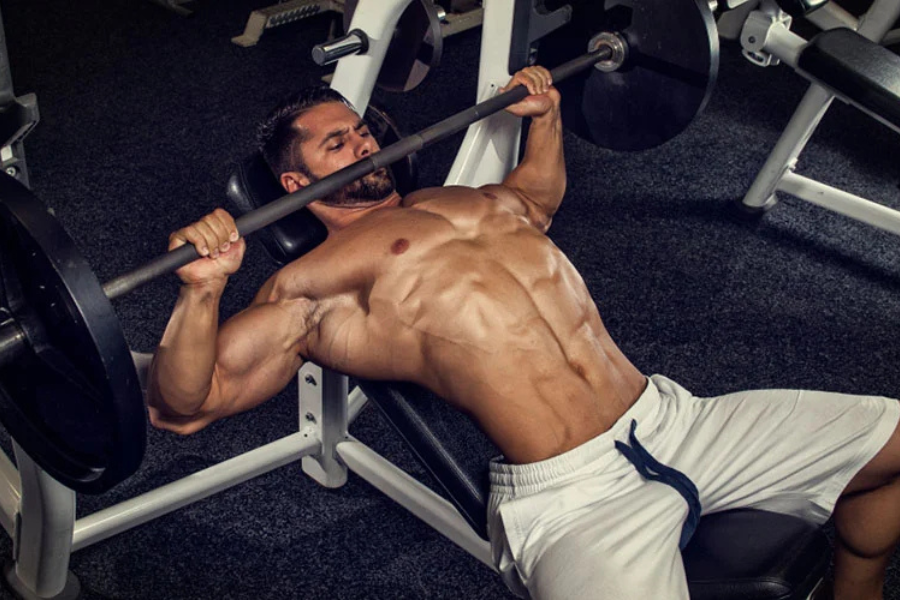
Training your chest is about more than building impressive pecs. When you develop a strong chest, you support everything from pushing grocery carts to carrying heavy loads. Your posture improves, your upper body power increases, and you feel more confident tackling physical challenges. If you want to get the most out of your workouts, you need the best chest exercises in your routine. Below, you will find ten proven movements along with practical tips to help you get stronger and build the well-rounded chest you want.
Master pushups for a solid base
Why it helps
Pushups remain one of the best chest exercises for building muscle, size, and strength at home. They closely mimic the mechanics of a bench press, except you use your body weight as the primary form of resistance. According to research, pushups are also an efficient way to train core stability because you engage your abs and glutes to maintain a straight body line [1]. If you are new to chest training, this is your starting point.
How to do it
- Begin in a high plank position, aligning your wrists under your shoulders.
- Keep your core tight by engaging your abs, squeezing your glutes, and maintaining a straight spine.
- Turn your elbow pits slightly forward, which promotes external shoulder rotation.
- Lower your chest until it hovers about an inch above the floor.
- Press back up to full extension, keeping your elbows close to your sides to maximize chest involvement.
Recommended sets and reps
- Beginners: 3 sets of 8-10 reps, focusing on consistent form and full range of motion.
- Intermediate/Advanced: Increase difficulty with advanced variations such as archer pushups or single-arm pushups. You might also experiment with tempo changes or pause at the bottom to increase time under tension [1].
Use barbell bench press
Why it helps
The barbell bench press is one of the most iconic chest exercises for a reason. It allows you to press heavier weights compared to many dumbbell or bodyweight movements, resulting in increased chest strength and power [2]. Beyond the chest, you also activate your lats, glutes, and core, making the bench press a compound movement with full-body benefits [3].
How to do it
- Lie on a flat bench with your eyes directly under the bar.
- Grip the bar slightly wider than shoulder-width, ensuring your wrists are straight and not overly extended.
- Engage your core and glutes to stabilize your torso.
- Unrack the bar, position it over your chest, and lower it slowly to touch (or nearly touch) the mid-chest area.
- Press the bar back up to full extension, exhaling as you drive through your chest and triceps.
Recommended sets and reps
- For strength: 3-5 sets of 2-6 reps, focusing on pushing heavier loads.
- For hypertrophy (muscle growth): 3-4 sets of 6-12 reps, emphasizing controlled lowering and powerful pressing.
- Always prioritize form and keep your shoulders safe by retracting your shoulder blades before each rep.
Build with dumbbell bench press
Why it helps
When you use dumbbells, you introduce independent movement for each arm. This corrects muscle imbalances, forces each side of your chest to work equally, and usually provides a greater range of motion compared to barbells. Dumbbells also offer safer “fail” points because you can drop the weights to the side if needed [4].
How to do it
- Sit on a bench and rest a dumbbell on each thigh.
- Lie back, bringing the dumbbells up so they hover directly over your chest.
- Position your hands in line with your mid-chest, palms facing forward.
- Lower both dumbbells slowly, keeping your elbows close to 45 degrees from your torso.
- Press back up, fully extending your elbows without locking them out harshly.
Recommended sets and reps
- For balanced strength and size: 3-4 sets of 6-8 reps. [5]
- Focus on a steady tempo. Aim to lower each rep for about two seconds, then press up with power.
- If you notice any strength imbalance, slightly alter your grip (neutral or angled) to find a more comfortable range of motion.
Target upper chest incline press
Why it helps
Many lifters overlook the upper portion of the chest. An incline press shifts more tension to the clavicular head (upper chest), giving you a balanced look and more strength at various pressing angles. Using a bench angle between 30 and 45 degrees helps ensure you engage the upper chest without overly stressing your shoulders [2].
How to do it
- Adjust your bench to a 30-45 degree incline.
- If using a barbell, position yourself so the bar is directly over your upper chest. With dumbbells, hold them at shoulder height.
- Lower the weight slowly, feeling the stretch in your upper pecs.
- Push the bar or dumbbells back up in a controlled manner, focusing on squeezing through your upper chest.
- Keep your elbows slightly tucked to avoid straining your shoulders.
Recommended sets and reps
- For balanced growth: 3-4 sets of 8-10 reps [5].
- Keep rest periods around 60-90 seconds to maintain muscle tension.
- Monitor your shoulder comfort. Adjusting the bench angle helps you find a sweet spot that targets your upper chest without pain.
Isolate with cable chest fly
Why it helps
The cable chest fly isolates your chest by focusing on horizontal adduction. Cables create constant tension, which challenges the chest from start to finish. You can adjust the pulley height to target different areas, such as placing them high for lower chest focus or low for upper chest focus. At a 45-degree incline, you get stronger emphasis on the upper chest [2].
How to do it
- Set two cable handles at chest height or adjust them to your desired angle.
- Stand with one foot slightly in front of the other for stability.
- Grasp the handles, extend your arms out to either side, and keep a slight bend at your elbows.
- Exhale as you bring your hands together in front of your chest, focusing on the squeeze.
- Inhale and slowly return to the start, tracking the cable path for tension.
Recommended sets and reps
- 2-4 sets of 10-15 reps is typical to maximize hypertrophy and definition.
- Pause for a beat at the midpoint of each rep to heighten muscle engagement [6].
- Keep your core braced to stabilize your lower body and limit sway.
Lean in to bodyweight dips
Why it helps
Bodyweight dips primarily hit your lower chest but also recruit your triceps and shoulders. When you lean your upper body forward and let your elbows flare slightly, you shift more tension onto the pecs. Dips can be progressed or regressed. You might use an assisted dip machine or loop exercise bands for support. When you get stronger, you can even add a weight belt to challenge yourself further [2].
How to do it
- Position yourself between parallel bars or on a dip station.
- Grip the bars and straighten your arms, supporting your full body weight.
- Lean forward slightly to bias your pecs.
- Bend your elbows and lower your body until your upper arms are about parallel to the floor.
- Press back up, extending your arms fully without locking out your elbows.
Recommended sets and reps
- Start with 3 sets of as many clean reps as possible (AMRAP). Over time, you can add another set or two.
- If you cannot do bodyweight dips unassisted, try a machine or resistance band for support.
- Keep your movement smooth. Avoid jarring your shoulders at the bottom.
Try decline dumbbell press
Why it helps
A decline press angles your body to emphasize the lower and mid-chest. It is especially helpful if you tend to develop the upper chest more readily and need to balance out your pecs. Dumbbells let each side of your body work independently, reinforcing balanced development and a wider range of motion. You also reduce stress on the shoulders because the decline angle can feel more comfortable for some lifters [6].
How to do it
- Secure your ankles on a decline bench so you do not slide downward.
- Hold a dumbbell in each hand at about chest level.
- Slowly lower the dumbbells toward your lower chest.
- Exhale and press upward, making sure to keep your elbows from flaring out too wide.
- Control the weight both on the descent and ascent, feeling your chest contract.
Recommended sets and reps
- 3-4 sets of 8-10 reps, or adjust based on your focus (strength vs. hypertrophy).
- Pause at the bottom to remove momentum and maximize muscle recruitment.
- Keep your core engaged and back pressed into the bench to maintain stable form.
Add dumbbell chest fly
Why it helps
A dumbbell fly specifically targets your chest through adduction, stretching and contracting the pecs in a way that presses alone cannot. You can do these on a flat bench or incline bench. This movement complements your pressing exercises by focusing on a broader motion arc. According to a 2025 Men’s Health article, 3 sets of 10-12 reps can optimize chest engagement [5].
How to do it
- Lie on a flat or incline bench with a dumbbell in each hand.
- Extend your arms directly over your chest, palms facing each other.
- Slightly bend your elbows, then lower the weights out to your sides in a wide arc.
- When you feel a stretch in your chest, reverse direction and bring the dumbbells back together.
- Focus on keeping your arms almost locked in that slight bend to protect your elbows and shoulders.
Recommended sets and reps
- Usually performed for 2-3 sets of 10-12 reps to emphasize muscle definition and balance.
- Go lighter than you might with presses, as flyes put more stress on your shoulder joints if you go too heavy.
- Maintain slow, controlled reps to truly feel the muscle working instead of relying on momentum.
Protect shoulders with floor press
Why it helps
The dumbbell floor press is a good option if you do not have a bench or want to reduce stress on your shoulders. Because your elbows stop when they hit the floor, you limit the range of motion at the bottom, which can help prevent overextension. It is also a useful variation if you struggle with shoulder discomfort during traditional bench exercises [5].
How to do it
- Sit on the floor with a dumbbell on each thigh.
- Carefully lie back, bringing the dumbbells to your sides at chest level.
- Bend your knees and keep your feet planted for stability.
- Press the dumbbells up over your chest until your arms are fully extended.
- Lower them slowly until your upper arms briefly touch the floor, then press again.
Recommended sets and reps
- 3-4 sets of 8-10 reps is typical.
- Keep your elbows at about 45 degrees to avoid shoulder strain.
- If you need extra stability, place a pad under your elbows to cushion the lowering phase.
Elevate intensity with advanced pushups
Why it helps
Pushups do not have to be basic. Advanced variations, such as archer pushups or single-arm pushups, place more load on one pec and demand extra core and glute stability. You can also incorporate training structures like EMOM (every minute on the minute) or AMRAP (as many reps as possible) sets to make your pushup workouts progressively challenging. Without any equipment, you can recruit more muscle fibers while continually keeping the movement fresh and intense [1].
How to do it
- For archer pushups, start in a wide pushup position. As you lower your torso, shift your weight to one side, bending that arm while keeping the other arm almost straight.
- For single-arm pushups, place your feet slightly wider, and position one hand under your mid-chest. The non-working arm can rest behind your back or simply hover off the floor.
- Maintain a tight core to prevent your hips from sagging.
- Push back up to the top position, then repeat on the other side (if you are doing unilateral variations).
Recommended sets and reps
- Start with 2-3 sets of 5-8 reps per side for unilateral versions.
- You can also try short EMOM workouts, such as 5 reps on the minute, for 10-12 minutes.
- Pauses and slow negatives add extra challenge without requiring external weight.
Put your chest routine together
You have a variety of exercises targeting all areas of your chest—from your clavicular head at the top to your lower pecs near the sternum. To create a balanced workout, combine pressing and isolation movements:
- Pick 2 pressing exercises: For instance, barbell bench press and incline dumbbell press.
- Add 1-2 isolation exercises: Cable fly, dumbbell fly, or advanced pushups.
- Incorporate dips or decline presses to catch lower-chest development.
- Aim for 10 total weekly sets for your chest if you want to maintain your gains, and ramp up to 15 or more if you are chasing growth [2].
Try training your chest twice a week. If you do not notice progress in strength or size after a month, consider increasing your frequency to three times weekly [7]. Pay close attention to your form, keep your core tight, and think about where you feel tension in your chest. With consistent effort, smart exercise selection, and a focus on proper technique, you will see noticeable results in both strength and physical changes.
As you commit to building your chest, remember each exercise can be adjusted to match your current fitness level. Start light, master technique, and add more challenging variations or heavier weights once you feel confident. Balanced chest development not only enhances your physique but also boosts overall pressing power in everyday tasks—so pick one or two new moves to try this week. Stick with it, and watch your chest transform.